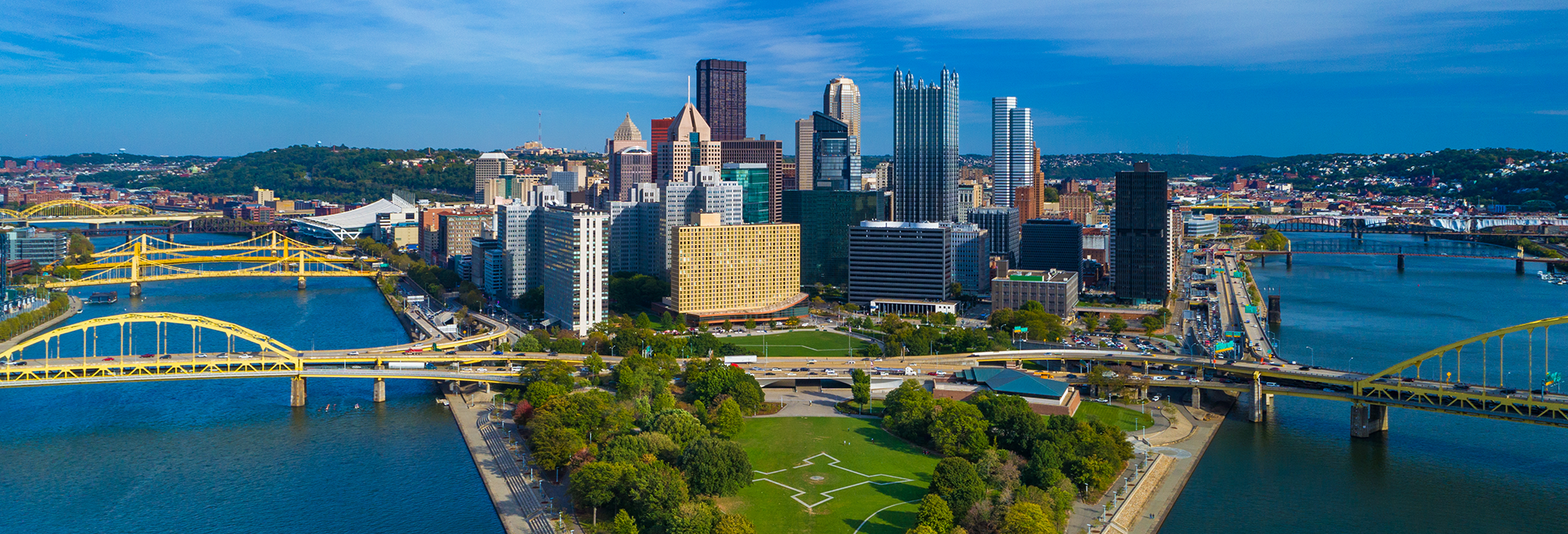
Aerial view of the Pittsburgh metro area
Learn More About the Pittsburgh Region
The Pittsburgh region is where legacy industries evolve into next-generation opportunities. Spanning eight counties in western Pennsylvania, the region offers strategic access to major U.S. markets, placing companies within 400 miles of cities such as Cleveland, Washington, D.C., New York City, Indianapolis, and Philadelphia.
Built on a foundation of industrial strength, Pittsburgh has transformed into a hub for innovation, talent, and real-world application. Today, the region brings together advanced industries, a highly skilled workforce, and a collaborative business environment—supported by a high quality of life that attracts and retains talent.
This is a region defined not just by where it’s been, but by where it’s going. In Pittsburgh, innovation isn’t theoretical—it’s tested, proven, and scaled in the real world.
The History of the Pittsburgh Region
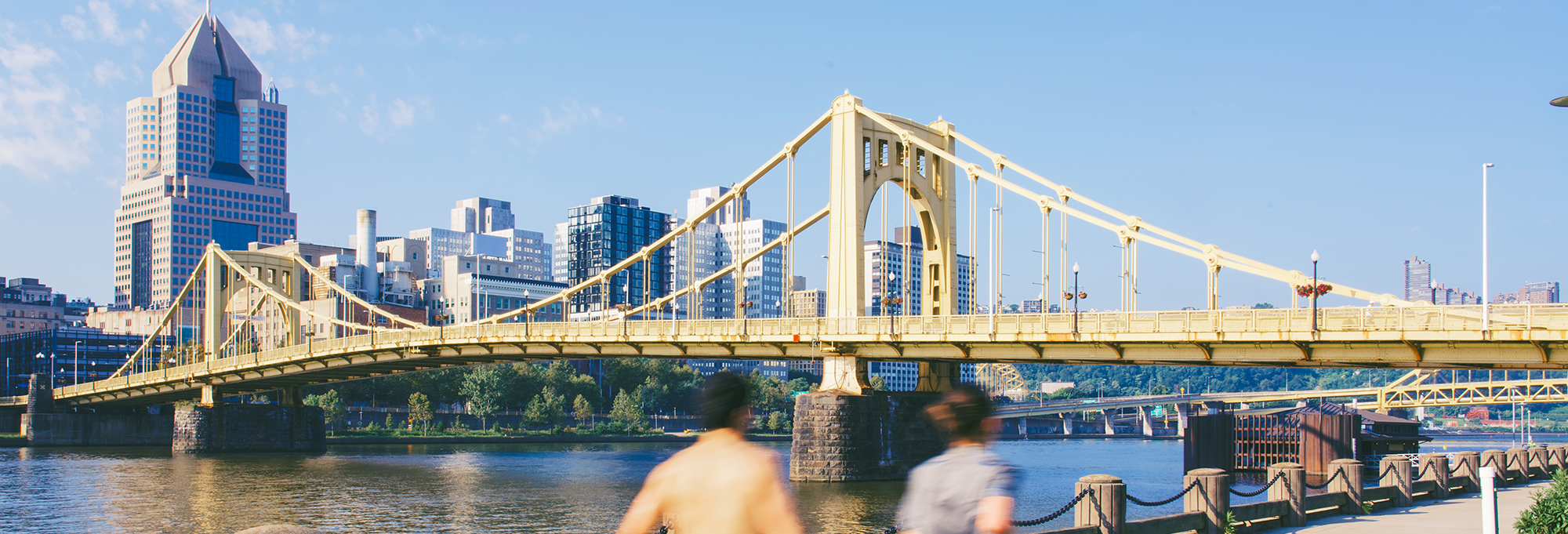
Known as the “Gateway to the West” from its early days as a frontier village, Pittsburgh – with its abundant natural resources – helped power its rise as the beating industrial heart of the nation. Powerhouse companies like U.S. Steel, Westinghouse, and Alcoa got their start here, establishing a pattern of enterprising ingenuity for future generations to emulate.
Today, the Pittsburgh region continues to produce some of the brightest minds and most daring innovations in the country. Companies in our regional ecosystem are pushing the boundaries of the next-generation innovation in advanced manufacturing, energy/climate tech, life sciences & healthcare, robotics & AI, and more.
What Is Considered the Pittsburgh Metro Area?
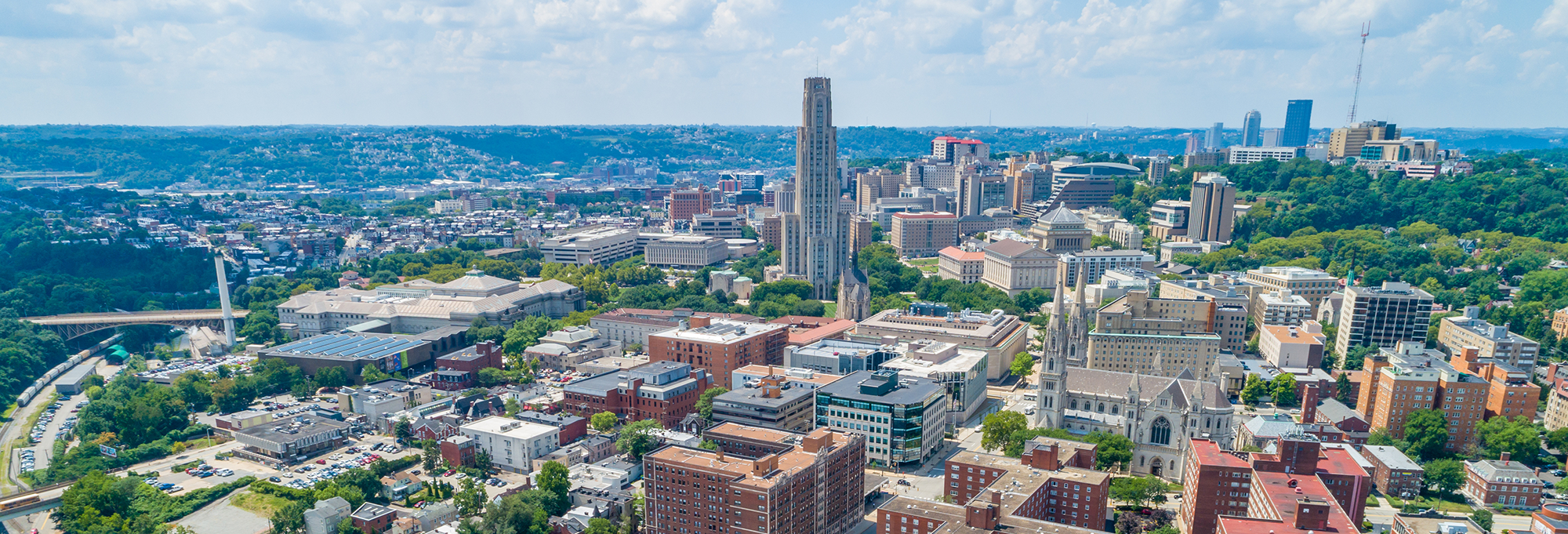
According to the United States Census Bureau, the Pittsburgh metropolitan statistical area (MSA) includes eight southwestern Pennsylvania counties: Allegheny County (home to the City of Pittsburgh), Armstrong County, Beaver County, Butler County, Fayette County, Lawrence County, Washington County, and Westmoreland County.
The U.S. Census Bureau estimates that around 2.4 million people live in the Pittsburgh metropolitan area. It covers a geographic space of nearly 5,300 square miles – around 700 square miles more than the Philadelphia metro area.
The greater Pittsburgh metropolitan area is also a part of the Pittsburgh-New Castle-Weirton, Pennsylvania-Ohio-West Virginia Combined Statistical Area (CSA). This includes the previous Pittsburgh counties, as well as Brooke County, Hancock County, Indiana County, Jefferson County, and Lawrence County.
What Is Pittsburgh Famous For?
An educated population focused on the future. Distinctive food and culture you can only get in Pittsburgh. Robust infrastructure with easy access to the rest of the country. Attractive neighborhoods with an affordable price tag. Global companies and top-notch universities. Suffice it to say, Pittsburgh is famous for more than one thing. Let’s break it down.

Diverse Demographics
People of all cultures and backgrounds call Pittsburgh home. In terms of demographics, the area population of the Pittsburgh MSA is 83% white, 7% Black, 3% Asian, and 2% Hispanic. While the median age is nearly 43, the Pittsburgh region has a significant population of young professionals — approximately 490,000 people, ages 25-39. The region’s educational attainment exceeds national averages, with 95.2% holding a high school diploma and 38.1% holding a bachelor’s degree or higher.

Food & Culture
Pittsburgh boasts a food culture that is uniquely its own, from pierogies brought in by Eastern European immigrants to the iconic influence of Pittsburgh-born H.J. Heinz (yes, that Heinz). Pittsburgh is known for signature dishes like the famous Primanti’s sandwich, which combines french fries, coleslaw and corned beef. If that’s not your taste, no worries. Pittsburgh has everything from James Beard-nominated chefs (Apteka and Fet-Fisk chefs were recently recognized), established family-owned restaurants and restaurant incubators featuring up-and-coming and aspiring chefs.
Pittsburgh also has a vibrant arts and culture scene, including several museums, like the renowned Carnegie Museum of Art and the Andy Warhol Museum, adjacent to downtown Pittsburgh. With the region’s cultural footprint including artistic legends like Andy Warhol and August Wilson, it’s safe to say Pittsburgh knows culture.

Safety & Affordability
In Pittsburgh, you don’t have to choose between a high quality of life and a low cost of living. Pittsburgh’s crime rate is well below the national average and continues to decrease over the years. Meanwhile, home prices and rents are both significantly more affordable than the national averages.
There are 90 unique neighborhoods in the City of Pittsburgh alone — each with a distinctive vibe and culture. In addition, there are dozens of communities near the city or in neighboring counties, like Beaver, Bethel Park, Connellsville, Greensburg, Mount Lebanon, and New Castle.

Ideal Infrastructure & Market Access
Getting around in the Pittsburgh area and traveling outside of it is simple with the region’s outstanding infrastructure. Pittsburgh is located over 100 miles south of the Great Lakes and Lake Erie. Downtown Pittsburgh sits at the confluence of the Allegheny and Monongahela rivers, forming the Ohio River.
Within the region, commuters can use four different interstates, including the Pennsylvania Turnpike. Looking to travel out of town? Travelers can choose from the Pittsburgh International Airport (PIT) or the Arnold Palmer Regional Airport, depending on their needs and location. At PIT, a newly opened terminal (2025) delivers a modern, streamlined passenger experience designed for efficiency, accessibility, and long-term sustainability. From arrival to departure, the region’s infrastructure makes it easy to move within Pittsburgh and connect to destinations across the country and around the world.

Top Talent & Companies
Considering Pittsburgh’s strategic location, affordability, and rich culture, it’s no wonder that companies and talent alike are attracted to the region. World-class institutions like Carnegie Mellon University and the University of Pittsburgh serve as magnets for students and future workers. Some of the most well-known names across industries call Pittsburgh home: U.S. Steel, Westinghouse, PNC, Shell Polymers, and DICK’s Sporting Goods — to name a few. Eager to tap into the innovative and tech-minded talent pool, global tech firms like Amazon, Google, Apple, Duolingo, and Meta’s Reality Labs have set down roots in the Pittsburgh region.
Want to Shape the World?